
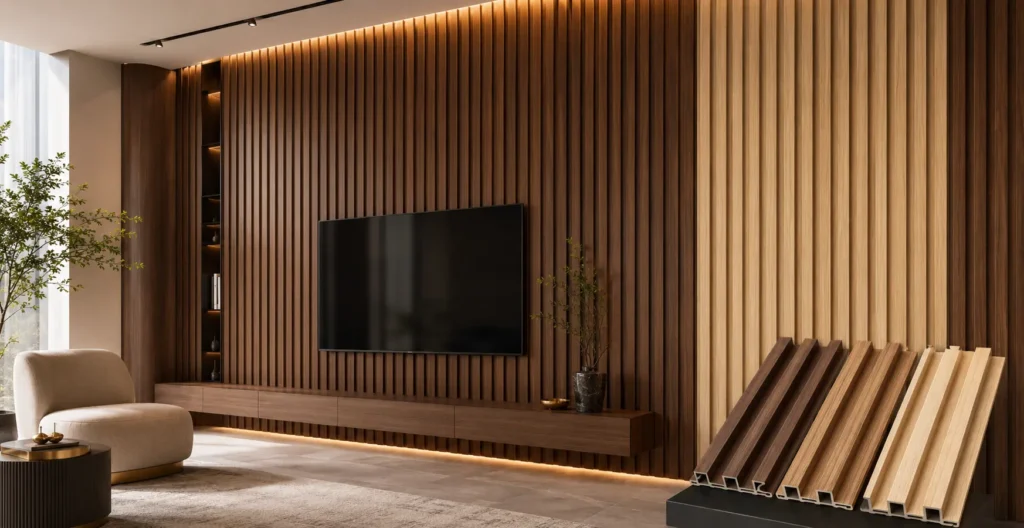
Modern interiors need more than attractive colours and furniture. Walls play an important role in defining the character of a room. Nexus WPC Louvers provide a practical way to add wooden texture, depth and clean vertical lines to residential and commercial interiors without relying on traditional solid-wood cladding.
Available in numerous designs, surface patterns and profile thicknesses, these indoor louvers can be used to transform plain walls, TV units, reception areas, bedrooms, offices and other feature spaces. Their long panel format creates a continuous appearance while reducing unnecessary joints across the installation.
This guide explains Nexus indoor WPC louvers, their available dimensions, design options, benefits, applications, accessories, installation considerations and maintenance requirements.
What Are WPC Louvers?
WPC stands for Wood Plastic Composite. WPC louvers are decorative wall panels designed to reproduce the warmth and appearance of wood while offering a convenient, ready-to-install wall-finishing solution.
Unlike a completely flat decorative sheet, a louver panel has raised lines, grooves or ribs. These patterns add visual depth and create changing highlights and shadows throughout the day. The result is more dimensional than ordinary paint or wallpaper.
Nexus WPC louvers are presented in nature-inspired finishes ranging from light wooden shades to darker tones, pronounced grains, knots and patterned surfaces. This makes it easier to select a design that complements modern, minimal, classic or luxury interiors.
Nexus WPC Louvers at a Glance
| Specification | Details |
|---|---|
| Product category | Indoor decorative WPC louvers |
| Standard panel width | 160 mm |
| Standard panel length | 2900 mm |
| Available profile thicknesses | 13 mm, 14 mm, 15 mm, 16 mm, 17 mm, 18 mm, 19 mm, 20 mm and 23 mm |
| Additional mould size shown | 195 × 14 × 2900 mm |
| Primary application | Interior wall decoration |
| Installation approach | Adhesive, clips and suitable fixing accessories |
| Design selection | Multiple wooden colours, grains and louver patterns |
| Recommended exposure | Indoor use; keep away from direct sunlight |
| Supporting accessories | Louver clips, adhesive tape and construction adhesive |
Dimensions should be confirmed against the selected product code before ordering because different profiles can have different depths and surface patterns.
Why Choose Nexus WPC Louvers?
Natural Wooden Appearance
Wooden finishes introduce warmth into an interior and work well with neutral colours, stone, marble, glass and metal. Nexus offers multiple wood-inspired surfaces, including light, medium and dark shades.
The catalogue includes subtle grains as well as more expressive designs with visible veins and knots. This range makes it possible to create anything from a calm Scandinavian-style wall to a darker and more dramatic luxury feature.
Attractive Three-Dimensional Effect
The raised profile of a louver panel creates depth that cannot be achieved with ordinary wall paint. When light falls across the grooves, it produces soft highlights and shadows.
This effect can make a simple wall look more structured. It is particularly useful behind a television, bed, reception desk or display unit where a clear focal point is needed.
Long Panel Format
Most panels in the collection have a length of 2900 mm. This long format can cover the height of many interior walls with fewer horizontal breaks.
Fewer visible joints generally produce a cleaner and more continuous finish. Actual cutting requirements will depend on the floor-to-ceiling height and the design of the installation.
Multiple Profile Thicknesses
The collection includes profiles from 13 mm to 23 mm thick. A thinner panel can create a relatively subtle wall treatment, while a deeper profile can produce stronger grooves and more noticeable shadows.
Thickness should be selected according to the design, installation surface, surrounding furniture, electrical fittings and available space. A thicker profile is not automatically the right option for every wall.
Carpenter-Friendly Installation
The brochure describes the panels as carpenter friendly and easy to apply. Their regular dimensions and compatible accessories help professional installers create straight, aligned wall surfaces.
However, correct measurement, cutting, substrate preparation and finishing remain important. Professional installation is recommended for large walls, corners, electrical points and areas that require precise pattern alignment.
Resistance to Common Wood-Related Problems
According to the supplied Nexus brochure, the louvers are designed to resist rot, decay and insect-related damage. These characteristics can make them a practical alternative to natural wooden wall treatments in suitable indoor environments.
Their actual service life will still depend on installation quality, surface condition, indoor environment and proper maintenance.
Nexus WPC Louver Size Collections
The collection is organised around different profile depths while keeping most panels at a standard width and length.
| Collection | Panel dimensions |
|---|---|
| 23 mm collection | 160 × 23 × 2900 mm |
| 20 mm collection | 160 × 20 × 2900 mm |
| 19 mm collection | 160 × 19 × 2900 mm |
| 18 mm collection | 160 × 18 × 2900 mm |
| 17 mm collection | 160 × 17 × 2900 mm |
| 16 mm collection | 160 × 16 × 2900 mm |
| 15 mm collection | 160 × 15 × 2900 mm |
| 14 mm collection | 160 × 14 × 2900 mm |
| 13 mm collection | 160 × 13 × 2900 mm |
| Additional mould profile | 195 × 14 × 2900 mm |
The catalogue contains numerous NX product codes within these groups. Examples include the NX-2300, NX-1700, NX-1600, NX-1500, NX-1400, NX-1300, NX-1800, NX-1900 and NX-2000 series.
Each product code represents a specific combination of surface colour, grain and louver design. Product codes should therefore be used when requesting a sample, quotation or order.
Understanding Panel Coverage
A standard 160 × 2900 mm panel has a gross face area of approximately:
0.160 m × 2.900 m = 0.464 square metres
Based only on these nominal dimensions, approximately 2.16 panels would be needed for one square metre. This is a theoretical figure and should not be used as the final ordering quantity.
The actual visible coverage may be lower because of:
- Interlocking or overlapping edges
- Cutting around corners and electrical fittings
- Pattern matching
- Damaged or unsuitable wall sections
- Door and window openings
- Installation wastage
- The effective face width of the selected profile
The final quantity should be calculated using the actual usable or visible width confirmed for the chosen NX product code. A reasonable cutting allowance should also be included.
Where Can Nexus WPC Louvers Be Used?
Living-Room Feature Walls
A full or partial louver wall can introduce texture without making the living room feel overcrowded. Light wooden shades suit bright, open interiors, while darker finishes can create a more formal appearance.
TV Unit Backgrounds
WPC louvers are commonly used around entertainment units because vertical grooves create a neat background for televisions, floating cabinets and display shelves.
Electrical points, cables, ventilation and television mounting arrangements should be planned before installing the panels.
Bedroom Headboard Walls
Installing louvers behind a bed can visually define the sleeping area. They can be combined with upholstered panels, bedside lighting, mirrors or plain painted sections to create a balanced headboard composition.
Reception and Waiting Areas
Reception walls are often the first major interior element seen by visitors. A wooden louver background can give a reception desk, company name or illuminated logo a more refined setting.
Offices and Meeting Rooms
Louvers can be used to add warmth to corporate spaces that otherwise contain hard surfaces such as glass, metal and white walls. They are suitable for selected feature walls, cabins and meeting-room backgrounds.
Retail Stores and Showrooms
Vertical wall patterns help frame display areas and product counters. A suitable colour can also support the overall branding and atmosphere of a showroom.
Restaurants, Cafés and Hospitality Interiors
Wood-style surfaces can create a welcoming environment in dining and hospitality spaces. Panels should be installed only in appropriate interior locations away from excessive heat, persistent moisture and direct sunlight.
Corridors and Transition Areas
A carefully positioned louver section can break up a long blank wall. It can also visually connect two areas without covering the entire corridor.
How to Select the Right WPC Louver
Start with the Interior Colour Scheme
Consider the flooring, furniture, wall paint, curtains and lighting before choosing a finish.
- Light wooden shades make compact rooms feel open and relaxed.
- Medium shades work well in versatile residential interiors.
- Dark wooden designs provide contrast and a premium appearance.
- Pronounced grains create a natural, expressive feature.
- Subtle patterns suit minimal and contemporary spaces.
Check the Physical Sample
Catalogue images and screens may not reproduce colour and texture exactly. Lighting conditions can also change how a finish appears.
A physical sample should be checked inside the actual room during both daytime and evening lighting.
Compare Profile Depth
A shallow profile gives a more restrained appearance. Deeper grooves create stronger shadows and can make the wall more prominent.
The panel should not interfere with doors, switches, skirting, furniture, cabinets or television mounts.
Consider the Size of the Wall
Fine patterns often work well on smaller sections, while wider or deeper profiles can suit large feature walls. The scale of the profile should remain proportional to the room and viewing distance.
Plan Edge Finishing
Exposed sides, corners and terminations should be planned before installation. Suitable edge mouldings or finishing methods help create a professional result.
Recommended Installation Process
The following is a general installation overview. The exact method should be confirmed for the chosen profile and wall condition.
1. Inspect the Wall
The installation surface should be stable, clean, dry and reasonably level. Loose paint, dust, oil and weak plaster can reduce adhesive performance.
Any dampness or leakage should be repaired before the panels are installed. Decorative cladding should never be used to conceal an unresolved moisture problem.
2. Measure and Plan the Layout
Measure the complete wall, including doors, windows, switches and sockets. Mark a straight reference line before fixing the first panel.
It is helpful to plan where the final cut panel will appear so that the two ends of the wall remain visually balanced.
3. Check the Panels
Verify product codes, colour consistency, dimensions and surface condition before cutting. Panels from the installation batch should be arranged on the floor to preview the sequence.
4. Cut to Size
Use suitable professional cutting tools and follow proper safety precautions. Accurate cutting is especially important around sockets, corners and ceiling edges.
5. Apply the Fixing System
Depending on the installation requirements, the system may use compatible construction adhesive, louver clips, adhesive tape or a combination of fixings.
The catalogue includes Nexus adhesive designed for use with WPC panels and other building materials. Adhesive suitability must be checked against the wall substrate and installation conditions.
6. Install the First Panel Carefully
The first panel controls the alignment of the entire wall. It should be checked with a level before proceeding.
Each following panel should connect evenly without forcing the joint or damaging the edge.
7. Finish Corners and Openings
Cut edges around switches, sockets and corners should be neat and secure. Suitable mouldings can be used where required to conceal exposed panel edges.
8. Clean the Finished Surface
Remove installation dust and adhesive marks using a method suitable for the product. Harsh chemicals or abrasive cleaning tools should be avoided.
Nexus Installation Accessories
The brochure lists supporting accessories for completing a louver installation.
Louver Clips
Louver clips help support and align panels where the installation method requires mechanical assistance. The catalogue shows 25 mm clip options.
The correct clip type and spacing should be confirmed for the chosen profile and wall substrate.
Adhesive Tape
Adhesive tape is shown in 10 mm and 20 mm sizes. Tape can assist positioning during installation, but it should not automatically be treated as the only structural fixing method.
Nexus Adhesive
The catalogue describes Nexus adhesive as a strong construction adhesive suitable for bonding materials such as:
- WPC panels
- Charcoal wall panels
- UV marble sheets
- Aluminium
- Wood
- Concrete
- Metal
- Other compatible building materials
The product literature also states that it can bond many base materials, including wet wood board. Nevertheless, surfaces should be prepared according to the adhesive instructions, and suitability should be tested before completing a large installation.
The specified storage period is up to 12 months under dry conditions below 27°C. The packaging instructions and current technical guidance should always be checked before application.
Care and Maintenance
WPC louver walls require simple but regular care to maintain their appearance.
- Remove loose dust with a soft, dry cloth or soft brush.
- Use a slightly damp cloth for ordinary marks.
- Wipe along the grooves to reach recessed sections.
- Avoid abrasive scrubbers that may affect the finish.
- Do not use unapproved solvents or harsh chemicals.
- Clean spills promptly.
- Keep the surface away from persistent water exposure.
- Avoid direct sunlight, as specified in the catalogue.
- Do not place unprotected high-heat sources against the panel.
- Inspect edges and joints periodically.
Before using any cleaning product, test it on an offcut or an inconspicuous area.
Important Usage Considerations
Nexus identifies these louvers as products engineered for internal use. They should not be presented as exterior cladding unless a specific product has separate written approval for outdoor use.
Installation locations should be evaluated carefully where there is:
- Direct or prolonged sunlight
- Water leakage
- Continuous high humidity
- Excessive heat
- An unstable or damaged wall
- A requirement for certified fire performance
- A special acoustic or structural requirement
Decorative WPC louvers should not be assumed to provide waterproofing, structural reinforcement, soundproofing or fire resistance unless those properties are supported by product-specific test documentation.
WPC Louvers Compared with Other Wall Finishes
| Wall finish | Main advantage | Important consideration |
|---|---|---|
| WPC louvers | Wooden appearance with a dimensional profile | Best used in suitable indoor conditions |
| Paint | Simple and economical | Does not provide physical texture |
| Wallpaper | Wide range of printed designs | Requires a smooth, dry wall |
| Natural wood | Authentic wooden character | May require more maintenance and treatment |
| Laminated panels | Clean and uniform surface | Usually flatter than a louver profile |
| Stone or marble | Strong premium appearance | Heavier and generally more complex to install |
| MDF louvers | Multiple decorative options | Moisture and substrate conditions require attention |
The right finish depends on the room, budget, desired appearance and maintenance expectations.
Frequently Asked Questions
Are Nexus WPC louvers suitable for exterior walls?
The supplied catalogue describes the panels as engineered for internal use and advises keeping them away from direct sunlight. They should therefore be used as indoor decorative panels unless written approval for a specific exterior application is available.
What is the standard size of a Nexus WPC louver?
Most products shown in the brochure are 160 mm wide and 2900 mm long. The thickness varies between collections, ranging from 13 mm to 23 mm. An additional 195 × 14 × 2900 mm mould profile is also shown.
Are all Nexus louvers the same design?
No. The catalogue includes numerous NX product codes representing different grains, colours and louver patterns. A physical sample should be checked before placing the final order.
Can WPC louvers be installed behind a television?
Yes, they can be used as a TV-unit background in an appropriate interior setting. Television brackets, wiring, ventilation and access to electrical points should be planned before installation.
How many panels are needed for a wall?
The quantity depends on the wall dimensions and the usable face width of the selected panel. The nominal gross area of a 160 × 2900 mm panel is approximately 0.464 square metres, but joints, cutting and wastage must be considered.
Can the panels be installed directly over paint?
Installation depends on the strength and condition of the painted surface. Loose, chalky or weak paint should not be used as a bonding base. The wall and adhesive requirements should be checked by the installer.
Can WPC louvers hide an uneven wall?
They may visually cover minor surface irregularities, but severely uneven, loose or damp walls should be repaired first. A poor substrate can affect alignment and fixing strength.
Are the panels resistant to termites and insects?
The Nexus brochure describes WPC louvers as resistant to insect damage, rot and decay. Correct product selection and installation are still necessary for long-term performance.
How should the panels be cleaned?
Use a soft dry or slightly damp cloth. Avoid abrasive scrubbers, unapproved solvents and harsh chemicals.
Is professional installation required?
Professional installation is recommended, particularly for large feature walls, corners, electrical cut-outs and designs that require accurate alignment.
Conclusion
Nexus WPC Louvers offer a versatile way to introduce wooden texture and three-dimensional detail into indoor spaces. Their 2900 mm length, 160 mm standard width, multiple profile depths and wide choice of nature-inspired finishes make them suitable for many residential and commercial feature walls.
The collection can be used in living rooms, bedrooms, offices, reception areas, showrooms and hospitality interiors. For the best result, the panel design should be selected using a physical sample, the substrate should be prepared correctly, and all corners, electrical points and finishing accessories should be planned before installation.
Most importantly, the panels should be used according to the brochure guidance: indoors, away from direct sunlight and with suitable clips, adhesive and professional installation practices.